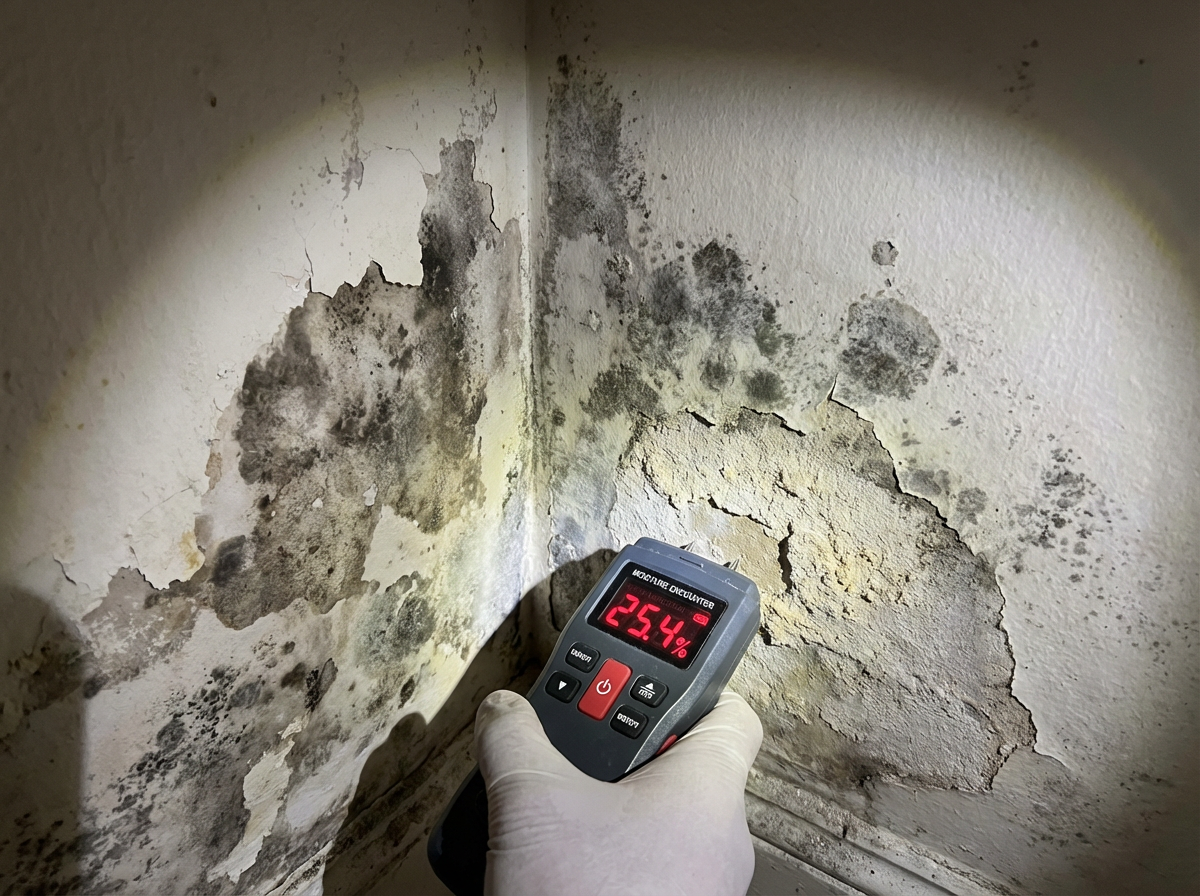
Damp represents one of the most common and concerning issues affecting properties throughout Essex. From Victorian terraced houses in Colchester to modern apartments in Chelmsford, moisture problems can affect any property type and cause significant damage if not properly addressed. This comprehensive guide explains the different types of damp, their causes, how surveyors identify moisture problems, available treatments, and typical costs to help Essex property owners and buyers make informed decisions.
Why Damp is Common in Essex Properties
Essex's climate and building heritage create particular vulnerability to damp problems. The county experiences moderate to high rainfall throughout the year with moisture-laden air from the North Sea affecting coastal and inland areas. Clay soils common across much of Essex expand and contract with moisture changes, affecting foundations and drainage. The extensive Victorian and Edwardian housing stock was built without modern damp proof courses and cavity walls.
Additionally, many older Essex properties have had ground levels raised over the decades, bridging original damp barriers. Modern lifestyle factors including increased internal moisture generation from cooking, bathing, and clothes drying combined with reduced ventilation in properties with sealed windows and doors exacerbate condensation issues.
Understanding these factors helps property owners recognize that damp problems in Essex properties are common rather than exceptional, and that professional assessment is essential for accurate diagnosis and appropriate treatment.
The Three Main Types of Damp
Damp problems in properties fall into three distinct categories, each with different causes and requiring different treatment approaches. Accurate diagnosis is essential because applying the wrong treatment wastes money and fails to resolve the underlying problem.
Rising Damp
Rising damp occurs when groundwater moves upward through walls via capillary action, similar to water being drawn up through a sponge. This phenomenon affects properties with absent, defective, or bridged damp proof courses. The groundwater contains soluble salts that are deposited in wall materials as the water evaporates, creating characteristic tide marks typically extending up to one meter above ground level.
Properties most vulnerable to rising damp include Victorian and Edwardian buildings built before damp proof courses were standard, properties where original slate or bitumen damp proof courses have failed through age or movement, and any property where ground levels have been raised above the damp proof course, creating a bridge for moisture.
Rising damp creates several distinctive characteristics that help surveyors identify this specific moisture problem. Damage is typically limited to the lower portions of external walls, usually the lowest meter. Tide marks appear on internal plaster with clear demarcation between affected and unaffected areas. Salt crystals often appear on wall surfaces as white fluffy deposits called efflorescence. Skirting boards, plaster, and decorations deteriorate in affected areas. A musty, distinctive smell often accompanies rising damp.
However, true rising damp is actually less common than many people believe. Research suggests that many cases diagnosed as rising damp actually result from other moisture sources including defective external walls, raised external ground levels, or internal condensation. Professional surveyors use moisture meters, visual inspection, and experience to distinguish genuine rising damp from other moisture problems that may present similar symptoms.
Penetrating Damp
Penetrating damp occurs when external water breaches the building envelope and enters through walls, roofs, windows, or other openings. Unlike rising damp which is limited to lower wall areas, penetrating damp can affect any part of a property where water ingress occurs. The pattern and extent of damage often provide clues to the penetrating damp source.
Common causes of penetrating damp in Essex properties include defective external walls where pointing has deteriorated, bricks are porous or damaged, or render has cracked, allowing rainwater penetration. Roof defects including missing or slipped tiles, defective lead valleys and flashings, blocked or overflowing gutters, and deteriorated roof felt allow water to enter from above.
Window and door issues such as defective seals, deteriorated frames, or inadequate weatherproofing around openings create penetration points. Defective or blocked drainage including gutters, downpipes, and ground drainage can cause water to overflow and saturate walls. Raised external ground levels or defective paving sloping toward walls rather than away from the property create moisture problems at wall bases.
Penetrating damp typically presents different patterns from rising damp. Moisture penetration occurs after heavy rain or in specific wind directions that drive rain against certain walls. Damage may appear anywhere on walls, not just near ground level. Staining patterns often indicate the water source location, such as below windows, under roof eaves, or near downpipes. The affected area may be localized rather than affecting entire wall lengths.
Professional diagnosis of penetrating damp requires identifying and addressing the external defect causing water ingress. Simply treating internal symptoms without fixing the source ensures the problem will recur.
Condensation
Condensation represents the most common form of dampness in modern properties and results from water vapor in internal air condensing on cold surfaces. When warm, moisture-laden air contacts cold surfaces like windows, external walls, or poorly insulated areas, the air cools below its dew point and water droplets form on the surface. Over time, persistent condensation can cause significant damage including mold growth, decoration deterioration, and timber decay.
Several factors contribute to condensation problems in Essex properties. Modern lifestyles generate substantial moisture through cooking, bathing, clothes drying, and even breathing, with typical families producing twenty to thirty liters of water vapor daily. Reduced ventilation in properties with sealed windows, draught-proofing, and extract fans that aren't used properly prevents moisture-laden air from escaping. Inadequate heating and insulation create cold surfaces where condensation forms.
Condensation exhibits distinct characteristics differing from rising damp and penetrating damp. Problems worsen during colder months when heating creates temperature differentials and windows remain closed. Moisture appears on windows, mirrors, tiles, and other impervious surfaces as water droplets. Black mold grows on walls, particularly in corners, behind furniture, and in bathrooms and kitchens. Affected areas typically include cold spots, external walls, and poorly ventilated spaces like wardrobes. The problem is widespread throughout properties rather than localized to specific walls or areas.
Solving condensation problems requires addressing both moisture generation and ventilation. Simple remedial measures can dramatically improve condensation issues without expensive building works.
How Surveyors Identify Damp Problems
Accurate diagnosis of damp problems requires professional expertise and proper equipment. Our chartered surveyors use a combination of visual inspection, moisture measurement, and experience to identify damp types and causes.
Electronic moisture meters provide objective measurements of moisture content in wall materials. These devices use electrical resistance or capacitance principles to detect moisture presence and approximate levels. However, moisture meters have limitations including inability to distinguish between moisture and hygroscopic salts which give similar readings, inability to determine moisture source (rising damp, penetrating damp, or condensation), and variation in accuracy depending on wall materials and conditions.
Experienced surveyors interpret moisture meter readings in conjunction with visual evidence and knowledge of building construction rather than relying solely on meter readings. Visual inspection remains fundamental to damp diagnosis. Surveyors examine external walls for defects including deteriorated pointing, damaged render, cracked brickwork, and porous materials. Roof condition assessment identifies potential water ingress routes. Ground level inspection around the property identifies whether external levels bridge damp proof courses or slope incorrectly. Internal examination documents patterns of staining, salt deposits, mold growth, and decoration damage that indicate specific damp types.
Professional surveyors also consider contextual information including property age and construction type, location and orientation, maintenance history, recent weather patterns, and occupant lifestyle factors that affect moisture and ventilation. This comprehensive approach ensures accurate diagnosis that informs appropriate and cost-effective treatment recommendations.
Damp Treatment Options and Costs
Treatment approaches and costs vary dramatically depending on damp type and severity. Understanding available options helps property owners make informed decisions and avoid unnecessary or inappropriate treatments.
Rising Damp Treatments
If rising damp is confirmed, several treatment options exist. Chemical damp proof course injection remains the most common treatment, involving drilling holes into mortar beds or bricks at regular intervals and injecting water-repellent chemicals that form a barrier to rising moisture. This treatment typically costs £800 to £2,000 for an average terraced house depending on wall length and access. The treatment usually comes with a long-term guarantee from specialist contractors.
Physical damp proof courses involve cutting into walls to insert impermeable barriers like slate or specialized membranes. This approach is more disruptive and expensive than chemical injection, typically costing £2,000 to £5,000 or more, but can be more effective in some situations. Electro-osmotic systems use electrical charges to repel moisture downward, though their effectiveness remains debated and costs vary significantly.
All rising damp treatments require removal and replacement of contaminated plaster containing hygroscopic salts. Salt-contaminated plaster continues absorbing moisture from the air even after the rising damp source is addressed, so replastering is essential for successful remediation, typically adding £1,000 to £3,000 to treatment costs depending on affected area extent.
Penetrating Damp Treatments
Treating penetrating damp focuses on identifying and repairing the external defect allowing water ingress. Treatments vary enormously depending on the specific problem. External wall repointing to restore weatherproofing typically costs £30 to £60 per square meter depending on wall height and access. Render repairs or replacement range from a few hundred pounds for small patches to £3,000 to £8,000 for complete house rendering.
Roof repairs including replacing missing tiles, repairing lead work, or clearing gutters may cost from £200 for minor works to £10,000 or more for complete re-roofing. Window and door repairs or replacements vary from £300 per window for repair to £800 to £1,500 for replacement windows. Drainage repairs including gutter replacement, downpipe repairs, or ground drainage improvements typically cost £500 to £2,000 depending on extent.
The key to cost-effective penetrating damp treatment is accurate diagnosis of the water ingress source. Unsuccessful treatments often result from addressing symptoms rather than underlying causes or treating internal symptoms while ignoring external defects.
Condensation Solutions
Condensation problems often respond to relatively inexpensive interventions. Improved ventilation represents the most effective approach including using existing extraction fans when cooking and bathing, opening windows briefly each day to allow air circulation, installing trickle vents in window frames for background ventilation, and upgrading bathroom and kitchen extraction fans if existing units are inadequate.
Adequate heating maintains surface temperatures above dew point, preventing condensation. Setting heating to maintain minimum temperatures even when properties are unoccupied helps, as does avoiding drying clothes indoors or using vented tumble dryers. Insulation improvements reduce cold surfaces where condensation forms including loft insulation, internal wall insulation for solid wall properties, and secondary glazing or double glazing replacement.
Many condensation problems can be resolved for minimal cost through behavioral changes and minor improvements. However, severe cases may require more substantial investment in insulation or heating systems costing several thousand pounds.
Damp and Property Transactions
Damp problems significantly affect property transactions throughout Essex. Understanding implications for both buyers and sellers helps ensure smooth property sales and protect everyone's interests.
For buyers, professional surveys are essential for identifying damp problems before committing to purchase. RICS Level 2 or Level 3 surveys include moisture testing and identify obvious damp issues, providing crucial information for negotiation or decision-making. Survey reports that identify significant damp provide leverage for negotiating purchase price reductions reflecting treatment costs. Mortgage lenders often refuse to lend on properties with severe damp until remediation is complete, potentially affecting property saleability.
Buyers should obtain detailed treatment quotations from reputable damp proof specialists before completing purchases on properties with identified damp. This ensures realistic budgeting for necessary works and prevents unwelcome surprises after completion. Understanding whether issues represent genuine problems requiring expensive treatment or minor concerns manageable through maintenance helps buyers make informed decisions.
For sellers, addressing known damp problems before marketing improves saleability and supports asking price. Properties with visible damp or musty smells deter buyers and attract low offers. Obtaining treatment guarantees from reputable contractors provides reassurance to buyers and adds value. Being transparent about historic damp problems and completed treatments prevents transaction collapse when buyers commission surveys.
Many sellers benefit from commissioning pre-sale surveys that identify and address damp issues before marketing. This proactive approach prevents problems derailing sales during buyer survey stages and demonstrates property quality to prospective purchasers.
Preventing Damp Problems
Prevention is invariably preferable to cure when dealing with damp problems. Regular maintenance and proper property management dramatically reduce damp risk and associated costs.
Regular property inspections should include checking external walls for defects, vegetation growth, or damaged pointing requiring attention. Roof and gutter condition should be assessed annually with gutters cleared of debris and any defects remedied promptly. Ground levels around properties should slope away from walls, and drainage should be checked to ensure proper operation. Internal signs of emerging damp including staining, mold growth, or musty odors should be investigated and addressed promptly.
Maintaining adequate ventilation and heating prevents condensation problems that can be misdiagnosed as rising or penetrating damp. Using extraction fans appropriately, opening windows regularly for air circulation, maintaining minimum heating levels, and avoiding moisture generation where possible all contribute to condensation prevention.
Addressing minor defects promptly prevents development of major damp problems. Repointing a small area of damaged mortar costs relatively little but prevents water ingress that could cause extensive internal damage. Regular maintenance represents excellent value compared to major damp remediation costs.
Choosing Damp Treatment Contractors
The damp proof industry unfortunately includes both reputable professional contractors and less scrupulous operators. Choosing the right contractor is crucial for effective treatment at fair prices.
Reputable contractors should be members of relevant trade bodies including the Property Care Association which represents professional damp proof contractors. They should offer insurance-backed guarantees typically covering twenty to thirty years that remain valid even if the contractor ceases trading. They should provide detailed specifications of proposed works and itemized quotations. References from recent customers should be readily available.
Buyers should be wary of contractors who diagnose extensive rising damp without proper investigation, recommend expensive treatments without explaining cheaper alternatives, refuse to provide written quotations or detailed specifications, or pressure for immediate decisions without allowing time for consideration and comparison.
Our chartered surveyors provide independent assessments of damp problems and proposed treatments, helping property owners avoid unnecessary works and ensure appropriate solutions at fair prices. This independent advice can save thousands compared to accepting contractor recommendations without professional verification.
Living with Historic Damp
Many older Essex properties show signs of historic damp that is no longer active. Understanding the difference between active problems requiring treatment and historic evidence that can be managed through maintenance helps property owners avoid unnecessary expense.
Historic damp evidence including old tide marks on walls, salt deposits that are dry and stable, or previous treatment visible through drill holes doesn't necessarily indicate current problems. If moisture levels are currently low and no active dampness is detected, expensive treatments may be unnecessary. Regular monitoring ensures any reactivation of problems is detected early, allowing prompt intervention if necessary.
Many Victorian and Edwardian properties throughout Essex have successfully accommodated minor moisture levels for over a century without significant damage. While modern standards expect properties to be completely free from damp, older buildings often function satisfactorily with monitoring and maintenance rather than expensive intervention.
Professional surveyors help distinguish between problems requiring immediate treatment, issues that can be monitored, and historic evidence requiring no action. This nuanced assessment protects property owners from over-treatment while ensuring genuine problems receive appropriate attention.
Conclusion: Managing Damp Problems Effectively
Damp represents one of the most common concerns affecting Essex properties, but understanding the different types, causes, and treatments enables property owners and buyers to manage these issues effectively. The key principles include obtaining professional diagnosis from qualified surveyors before committing to expensive treatments, addressing underlying causes rather than just symptoms to ensure effective long-term resolution, considering whether active treatment is necessary or if monitoring and maintenance suffice for minor issues, and choosing reputable contractors offering insurance-backed guarantees when treatment is required.
Regular property maintenance including keeping roofs, gutters, and external walls in good repair prevents many damp problems from developing. When issues do arise, prompt investigation and appropriate action prevents minor problems escalating into major damage requiring expensive remediation.
Don't allow damp problems to undermine your property value or living comfort. Professional assessment and appropriate treatment protects your investment and ensures your Essex home remains dry and comfortable for years to come.
Concerned About Damp in Your Essex Property?
Our experienced chartered surveyors provide professional damp assessments throughout Essex. We'll identify the type and cause of moisture problems and recommend appropriate, cost-effective treatments. Don't risk expensive unnecessary works - get independent expert advice.
Request a Damp Assessment